|
photos of other
sharks
To see more shark pictures,
click here
|
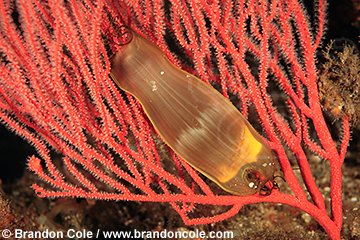
photo of eggcase of Swell Shark (Cephaloscyllium ventriosum) |

Oceanic Whitetip Shark photos,
Carcharhinus longimanus |
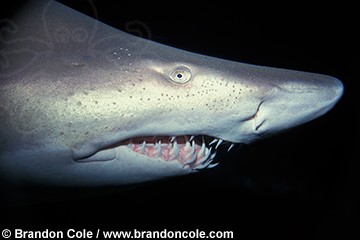
underwater pictures of Sand Tiger Shark (Eugomphodus taurus) |
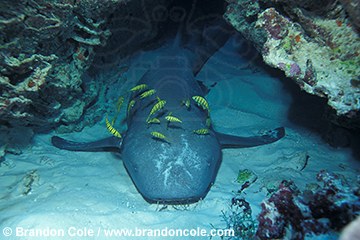
professional stock photography of Tawny Nurse Shark,
Nebrius ferrugineus |
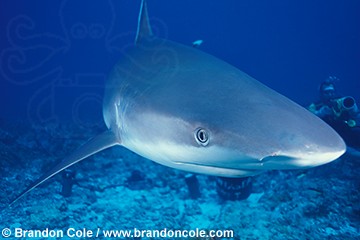
Carcharhinus albimarginatus- the
Silvertip Shark. tropical Pacific Ocean |
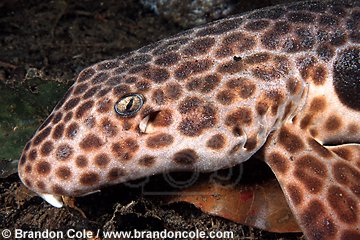
Epaulette Shark Hemiscyllium freycineti
photos tropical Indo Pacific Ocean |
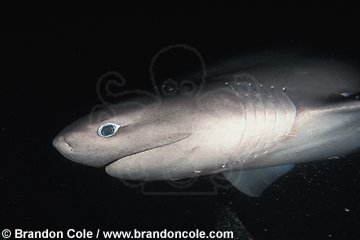
rare photos of Bluntnose Sixgill Sharks,
Hexanchus griseus |
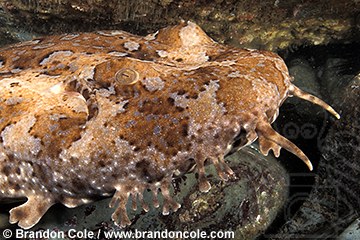
Ornate Wobbegong Shark images,
Orectolobus ornatus, from Australia |
|
common
name |
various
species |
| scientific
name |
various
species |
| range |
worldwide |
viewing
hotspots |
many |
| habitat |
various |
| size |
varying |
| diet |
varying |
| trivia |
see right |
|
Predating the dinosaurs
by some 200 million years, sharks have been swimming Earth’s seas
for 400 million years. To call them "primitive" because of
this would be a mistake. They are finely adapted, highly evolved
creatures. Sharks, of course, are fish. But unlike tuna, grouper, or
salmon (all bony fishes, or teleosts), sharks are cartilaginous
fishes, in the Class Chondrichthyes. Sharks (and their elasmobranch
cousins the rays, skates, and chimaeras) have a cartilaginous
skeleton containing no true bones. They also lack a swimbladder, and
instead of scales have sandpaper-like dermal denticles. Male
elasmobranchs have a pair of claspers, reproductive organs not
present in the teleosts. These are just a few of the differences
between the cartilaginous and bony fishes.
Approximately 350 species of sharks are
currently recognized by science. Some are small enough to fit in
your hand, like the pygmy shark, and others like the whale shark are
as large as a submarine. Some are dangerous (great white, tiger, and
bull are usually at the top of this list), but most are harmless
(examples include the epaulette, swell, and horn sharks). Many
sharks (example: whitetip reef) live in shallow coastal waters,
while others dwell in the deepest oceans (example: six gill). They
play vital roles in marine ecosystems worldwide.
|
|
| KEYWORDS
eggcase, eggcases, egg, eggs, swell shark, swell sharks, swell,
Cephaloscyllium ventriosum, oceanic whitetip shark, oceanic whitetip
sharks, oceanic, whitetip, shark, sharks, Carcharhinus longimanus,
dangerous, sand tiger shark, sand tiger sharks, sand tiger, sandtiger,
Eugomphodus taurus, gray nurse shark, gray nurse sharks, gray, grey,
nurse, Carcharias taurus, Odontaspis taurus, tawny nurse shark, tawny
nurse sharks, tawny, nurse shark, nurse sharks, Nebrius ferrugineus,
Nebrius concolor, Referred cirratum, silvertip shark, silvertip sharks,
silvertip, silver tip, silver-tip, Carcharhinus albimarginatus, epaulette
shark, epaulette sharks, epaulette, Hemiscyllium freycineti, harmless,
bluntnose sixgill shark, bluntnose sixgill sharks, sixgill, six gill,
six-gill, six, gill, bluntnose, Hexanchus griseus, ornate wobbegong shark,
ornate wobbegong sharks, ornate, wobbegong, wobbegongs, carpet shark,
carpet sharks, Orectolobus ornatus, fish, elasmobranch, elasmobranchs, photo, photos, photograph, photographs,
picture, pictures, stock, photography, marine, underwater |
|
