|
common
name |
Gray
Whale |
| scientific
name |
Eschrichtius
robustus |
| range |
warm
temperate to subpolar, North Pacific Ocean |
viewing
hotspots |
Baja
Mexico, California USA |
| habitat |
coastal |
| size |
to
45 feet (14m), 30 tons |
| diet |
amphipods
(tiny crustaceans) |
| trivia |
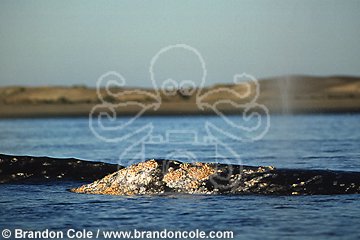
bottom-feeder
which sucks up sediments; usually heavily infested with external
parasites (whale lice and barnacles) |
|
Gray Whales were nearly
annihilated by the whaler’s harpoon in the 18th and 19th
centuries. However, unlike so many of the other giants whose
populations are still decimated to this day, strict protection since
1937 has seen the gray whale, Eschrichtius robustus, stage a
remarkable recovery. It is estimated that 22,000 grays once again
roam the Pacific Ocean, a figure that approximates this species’
historic abundance.
Averaging 12 feet long and some 2000
pounds, gray whale calves are born December through March in the
warm, shallow lagoons on the Pacific side of Mexico’s Baja
Peninsula. After six weeks of supping on the fat-rich mother’s
milk, during which time they will double their weight, the gray
whales will leave Mexican waters for their five to six thousand mile
journey north to the summer feeding grounds in the Bering Sea. It’s
the longest twice-annual migration of any mammal.
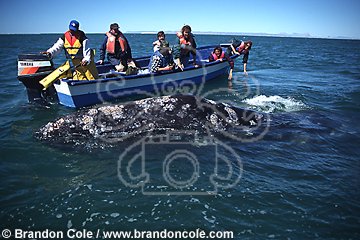
One of the best whale-watching experiences
on the planet awaits you in Baja where small boats ("pangas")
piloted by local guides take tourists into the lagoons to see mother
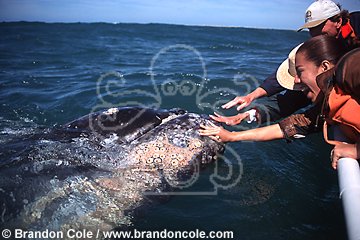
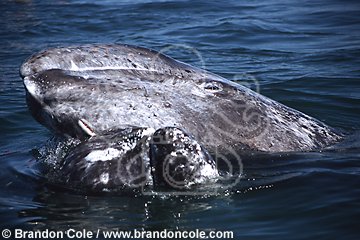
and calves. Over the years these whales have become more and more
acclimated to boats and people, to the point that it's not
uncommon to have "friendlies" swim right up to the pangas
and lift their snouts out of the water. Many people claim its a
life-changing experience to reach out and touch these curious,
gentle giants.
|
|
| KEYWORDS
gray whale, gray whales, gray, grey, whale, whales, grey whale, grey
whales, Eschrichtius robustus,
cetacean, cetaceans, marine mammal, marine
mammals, eschrichtiidae, baleen, whale-watching, eco-tourism, barnacles,
calf, photo, photos, photograph, photographs, picture, pictures, stock,
photography, marine, underwater |
|